A solar array can have excellent equipment and still underperform if it is placed in the wrong location. During solar panel installation, we look beyond the available roof area and ask a more useful question: where can the system receive consistent sunlight while remaining practical to install, maintain, and operate?
When we plan a solar installation, we evaluate the property as a complete energy site. Roof orientation, shading, structural condition, electrical access, available space, and future property plans can all influence the location we select. The best site is not always the largest one. It is the location that provides a strong balance between solar exposure, system performance, safety, and long-term practicality.
Why does solar panel location matter so much?
Solar panels produce electricity when sunlight reaches their photovoltaic cells. The amount and consistency of that sunlight directly affect energy production. A location that experiences regular shading from trees, buildings, chimneys, or other structures can reduce the output of an otherwise properly designed system.
We therefore treat site selection as one of the first technical decisions in a project. The National Renewable Energy Laboratory notes that solar resource assessment and system design should account for factors such as shading, orientation, tilt, and local conditions when estimating photovoltaic production.
Location also affects installation and maintenance. A roof with excellent sun exposure may still require additional evaluation if it has limited access, an aging surface, unusual structural conditions, or equipment that could interfere with the array.
Is a south-facing roof always the best location?
For many properties in the United States, a south-facing roof can provide strong solar exposure because of the sun’s typical path across the sky. However, we do not automatically select a south-facing surface without evaluating the rest of the property.
Roof pitch, shading, available area, local climate, electricity usage, and system design all matter. East- and west-facing surfaces can also be useful, particularly when the property’s energy consumption aligns with morning or afternoon production.
Our goal is to evaluate the complete solar resource rather than follow a single rule about direction.
How much shade is too much for solar panels?
Shade is one of the most important factors we examine during site evaluation. Trees, neighboring buildings, roof structures, vents, chimneys, and other obstructions can cast shadows across panels at different times of the day and year.
A site assessment should consider both current and expected future shading. A tree that is small today may become a significant obstruction several years from now. We therefore consider the surrounding property and potential changes when assessing a location.
Modern system designs can include technologies that help manage differences in panel performance, but reducing unnecessary shading remains an important part of good site planning.
What should we check before installing panels on a roof?
We first need to know whether the roof is a suitable long-term foundation for the project. Installing a solar array on a roof that may require replacement soon can create unnecessary complications.
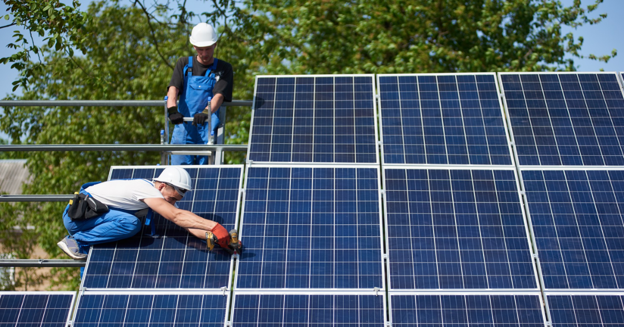
We consider factors such as roof age, condition, construction, available surface area, pitch, structural characteristics, penetrations, and access. We also look at where electrical equipment and system components can be placed.
Before finalizing the location, we consider:
- Roof condition and expected service life
- Available installation area
- Orientation and roof pitch
- Existing and potential future shading
- Structural considerations
- Electrical connection points
- Equipment access
- Local permitting and code requirements
- Future roof maintenance or replacement plans
This evaluation helps us avoid treating solar placement as simply a question of filling available roof space.
Does roof size determine how many panels can be installed?
Not by itself. Available roof area provides a starting point, but usable solar space is often smaller than the total roof footprint.
Setbacks, roof features, walkways, equipment, shading, structural limitations, and required access can reduce the area available for panels. We also consider the property’s electricity consumption because a larger array is not automatically the right array.
System size should reflect energy needs as well as physical space. This is especially important for properties where electricity use may change because of renovations, new equipment, EV charging, or future expansion.
Is ground-mounted solar a good alternative to rooftop panels?
Ground-mounted solar can be a strong option when a property has suitable open land and the roof is not ideal for an array. It may provide greater flexibility in orientation, tilt, placement, and access.
However, ground-mounted systems require their own site evaluation. We consider available land, grading, drainage, shading, vegetation, access, electrical distance, and local requirements.
A ground-mounted array may be particularly useful when the roof has limited usable area or when the property owner wants to preserve roof space for other purposes. It is not automatically better than rooftop solar. The best choice depends on the individual property.
How do orientation and tilt affect solar production?
Orientation determines the direction a panel faces, while tilt describes its angle relative to the ground. Both influence how much sunlight reaches the photovoltaic surface during the year.
We consider these characteristics alongside local solar conditions and the property’s electricity-use pattern. The ideal configuration is not identical for every site because energy demand, roof geometry, shading, and system objectives can change the design.
A professional assessment helps balance these factors rather than optimizing one measurement in isolation.
What if the property has limited ideal space?
Limited ideal space does not necessarily mean solar is impractical. We can evaluate alternative roof sections, ground-mounted areas, solar carports, and other suitable locations when available.
We also consider whether the available space can support the desired energy goal. In some cases, a smaller array may still provide useful on-site generation. In others, combining solar with battery storage or improving energy efficiency may provide a more suitable overall strategy.
The important point is to design around the property’s actual conditions instead of forcing a standard system onto an unsuitable location.
How can homeowners make a location decision with confidence?
The best approach is to combine measurements with practical property knowledge. We look at solar exposure, roof condition, shading, orientation, electrical requirements, access, and future plans before recommending a location.
A good site decision should answer several questions at once: Will the panels receive sufficient sunlight? Is the installation area suitable? Can equipment be accessed safely? Will future property changes affect production? Can the system connect efficiently to the building’s electrical infrastructure?
When these questions are answered early, the installation process becomes more predictable and the resulting system has a stronger foundation.
The Best Solar Site Is the One That Works Long Term
Choosing a solar location is ultimately an exercise in looking beyond the installation day. We want the selected area to support reliable energy production while remaining practical for maintenance, property changes, and future energy needs.
For customers considering solar panel installation or a new solar installation, Rocknoll Energy Systems approaches site selection around the actual conditions of the property. The strongest solar project is not necessarily the one with the most panels. It is the one placed where the property can make the most practical use of the sun for years to come.
FAQs
How much roof space is needed for solar panel installation?
The required roof area depends on the home's electricity use, panel efficiency, system size, roof geometry, shading, setbacks, and equipment placement. We evaluate usable space rather than total roof size because vents, chimneys, access areas, and other features can reduce the practical installation area.
Which direction should solar panels face for maximum energy production?
For many U.S. properties, south-facing panels can provide strong annual production, but direction alone does not determine the best design. We also evaluate roof pitch, shading, electricity-use patterns, local conditions, available space, and future property plans before selecting the most suitable orientation.
Is ground-mounted solar better than rooftop solar?
Ground-mounted solar is not automatically better, but it can offer useful flexibility when a roof has limited space, poor orientation, shading, or structural concerns. We compare both options based on sunlight, land availability, grading, access, electrical connections, permitting, maintenance, and the property's long-term energy objectives.