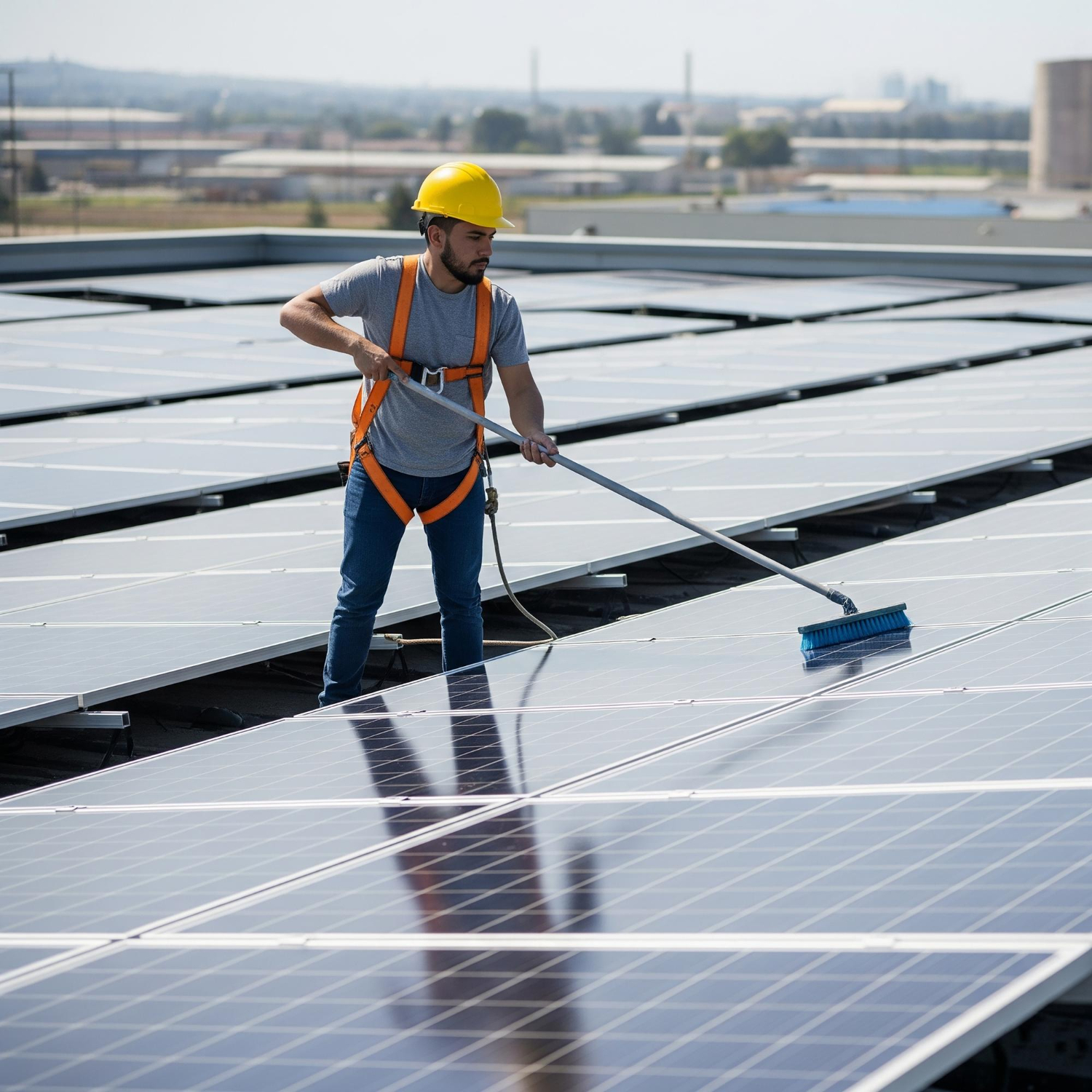
Studies show that dirty solar panels can lose anywhere from 15% to 25% of their efficiency. For most homeowners, that’s a meaningful amount of free energy left on the table. Regular cleaning is one of the easiest ways to protect your solar investment and make sure you’re getting everything your system was designed to deliver.
We don’t just spray your panels with a garden hose. Our technicians use purified, deionized water and soft-bristle equipment specifically designed for solar panels — the kind of clean that removes residue without scratching the glass or leaving mineral deposits behind.
We recommend cleaning at least once a year — more often if you’re in a high-pollen area, near a busy road, or have noticed birds taking a liking to your rooftop.
Regular solar panel cleaning helps remove dust, pollen, bird droppings, and other debris that may block sunlight and reduce electricity production. Cleaning is particularly useful in areas with heavy dust or limited rainfall. Rocknoll Energy Systems offers solar panel cleaning services to help maintain system performance.
The best approach is to use clean water and a soft, non-abrasive brush or equipment specifically designed for solar panels. Follow the manufacturer’s instructions and avoid abrasive materials that could damage the glass. For difficult-to-reach installations or stubborn buildup, professional cleaning can help reduce safety risks.
Yes, solar panels may need cleaning when dust, pollen, bird droppings, or other deposits accumulate on their surfaces. Rain can remove some loose dirt, but it may not eliminate stubborn residue. Cleaning frequency depends on local weather, surrounding vegetation, pollution, and observed changes in system performance.
Professional solar panel cleaning can be safer and more effective, especially for rooftop systems, steep roofs, or panels with stubborn buildup. Trained technicians use suitable equipment and cleaning methods. DIY cleaning may be practical for safely accessible panels, provided you follow manufacturer guidelines and avoid electrical or fall hazards.
Avoid abrasive brushes, scouring pads, harsh chemicals, and high-pressure washing that could damage panel surfaces or seals. Do not use unsuitable detergents or scrape debris with sharp tools. Cleaning hot panels with cold water may also cause thermal stress. Follow the manufacturer’s instructions or consult a professional cleaner.
Partners