A whole-home backup generator can look like a straightforward addition to a property. However, generator installation involves more than placing a unit outside and connecting a few wires. The actual timeline depends on site conditions, electrical requirements, fuel connections, permits, and the equipment being installed.
When we plan a Generac generator installation, we look at the complete project before setting expectations for the installation day. Generac notes that a typical home standby generator installation itself usually takes hours, while preparation can take multiple weeks because of permitting, site preparation, gas line work, and scheduling. That distinction is important for homeowners planning around an upcoming project.
How long does a Generac generator installation take?
For a straightforward residential project, the physical installation can often be completed within a day. More involved projects may require additional time when electrical upgrades, fuel-line work, difficult access, site preparation, or inspections are involved.
The timeline generally has two parts: preparation before installation and the actual work performed at the property. Treating these as separate stages gives homeowners a more realistic picture of when their backup power system will be ready.
What happens before the generator is installed?
The first stage is planning. We evaluate the home’s electrical requirements, determine the appropriate generator capacity, identify a suitable location, and consider how the unit will connect to the home’s electrical system.
We also account for the automatic transfer switch. For a standby generator, this component is essential because it manages the transition between utility and generator power. Generac’s installation guidance calls for the transfer switch to be installed near the main breaker box, with the generator connected through appropriate wiring.
Before installation begins, we may also need to account for:
- Local permits and inspection requirements
- Generator placement and required clearances
- Concrete or gravel base preparation
- Fuel-line requirements
- Electrical panel configuration
- Utility and code requirements
- Access for installation and future service
These details can determine whether a project moves quickly or requires additional preparation.
What happens on the installation day?
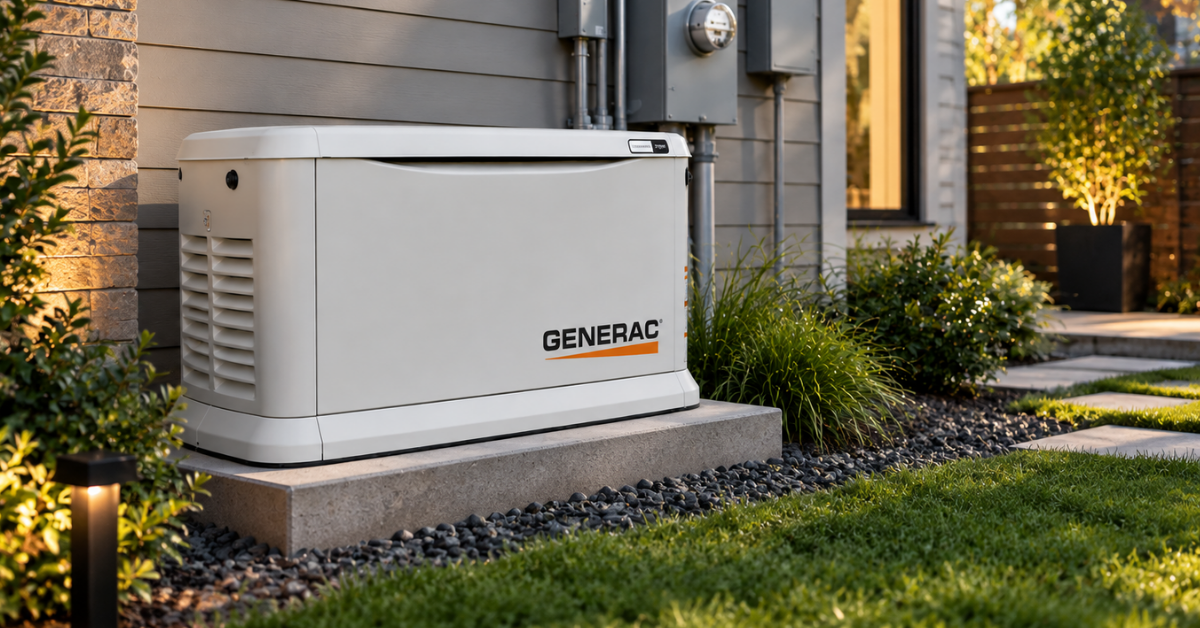
Once the site is ready, the physical process follows a logical sequence. First, we prepare the installation area. Depending on the property and equipment, this can involve a suitable gravel bed or concrete slab. Generac recommends specific clearance considerations around home standby generators, including space for airflow and future maintenance.
Next, we position the generator and install the transfer switch. Electrical wiring is then run between the generator and the home’s electrical system. The fuel connection is completed according to the applicable requirements for the installation.
The exact work varies from property to property. A straightforward site may require less work than a property where the generator location, electrical panel, fuel connection, or access presents additional challenges.
Why can some generator projects take longer?
The generator itself is only one part of the installation. Site conditions often have a greater effect on the schedule. For example, an installation may take longer if the electrical system needs modification, the selected location requires additional preparation, or the fuel connection needs to be extended. Permit processing and inspection scheduling can also affect the overall project timeline.
We therefore avoid treating every home as the same installation. A proper assessment helps identify potential obstacles before installation day instead of discovering them after work has started.
How does the transfer switch affect installation time?
The transfer switch is a key part of a standby power system. It allows the home’s electrical system to transition between utility power and generator power without relying on manual connection methods.
Generac’s documentation emphasizes that installations must comply with applicable electrical codes and that qualified professionals should handle electrical connections and transfer-switch work.
During installation, we connect the transfer switch to the appropriate utility and generator circuits. The wiring configuration depends on the equipment and electrical service at the property, so the complexity can vary considerably.
What happens after the generator is connected?
Installation is not finished simply because the generator starts. The system needs to be checked and tested. We verify the electrical connections, generator operation, transfer function, and other installation details. A simulated outage is an important part of the commissioning process because it allows the system to demonstrate how it responds when utility power is unavailable.
Generac’s installation guidance specifically describes simulating an outage after installation and setting the generator’s regular exercise cycle so the system can remain ready for future outages.
This final stage provides an important quality check. It confirms that the generator and transfer equipment work together as intended.
What can homeowners do to keep the project on schedule?
The best way to reduce avoidable delays is to address planning requirements early. We recommend having the property evaluated before selecting the installation date and discussing electrical capacity, generator placement, fuel supply, permits, and access with the installation professional.
Homeowners should also avoid assuming that a generator can simply be placed wherever there is available outdoor space. Manufacturer clearances, ventilation, accessibility, local requirements, and service considerations all matter.
The goal is not simply to install the equipment quickly. It is to complete the work correctly so the generator is ready when an outage occurs.
The Real Installation Timeline Starts Before Installation Day
A generator installation should not be measured only by the hours spent positioning the unit and connecting the system. The more important timeline begins with site assessment, system planning, permitting, electrical preparation, and fuel requirements.
For homeowners considering generator installation or Generac generator installation, Rocknoll Energy Systems approaches the process as a complete backup-power project. Preparing the site and system correctly may take more planning than expected, but that preparation is what helps ensure the generator is ready to perform when utility power is interrupted.
FAQs
Can a Generac generator work with a residential solar energy system?
Yes, certain Generac systems can be integrated with residential solar and energy storage configurations, but compatibility depends on the specific equipment and system design. We recommend evaluating the generator, inverter, battery, transfer equipment, electrical service, and control requirements together before installation to ensure proper operation.
What inspections are required after generator installation?
Inspection requirements vary by jurisdiction and project. Local authorities may require electrical, fuel, building, or other applicable inspections. The installation must comply with relevant codes and manufacturer requirements. We also perform functional checks and system testing to confirm proper operation before the backup system is placed into service.
How can I schedule a professional Generac generator installation?
We recommend beginning with a property assessment so the generator size, placement, electrical connection, transfer equipment, fuel requirements, permits, and site preparation can be evaluated. After those details are established, an installation schedule can be developed around equipment availability and local inspection requirements.